
AI Interior Design Styles: The Complete Guide to Every Look AI Can Create
A single room photo is now enough to preview dozens of finished looks: AI interior design tools apply anywhere from 50 to 160+ preset styles to a snapshot of your space in a matter of seconds. No sketching, no swatches, no guessing how a style will actually read in your own four walls.

This guide breaks down the styles that show up most often — Scandinavian, Japandi, industrial, bohemian and beyond — explains how AI restyles a photo while leaving your walls, windows and layout untouched, and walks through choosing (or blending) a style that fits the room you actually have.
How AI Interior Design Styles Actually Work
Every style-transfer tool follows roughly the same logic. What changes is the surface — the furniture, the palette, the decor. What stays fixed is the shell of the room itself.
- Upload a clear photo of the room
- Select the room type (living room, bedroom, kitchen, and so on)
- Pick a preset style or describe one in your own words
- Get a rendered version back in under half a minute
From Photo to Restyled Room in Seconds
The AI reads the geometry of your room — where the windows sit, how the walls meet, where the light falls — and then layers the chosen aesthetic onto the furniture, color palette and decor. Walls, windows and the underlying layout stay exactly as they are; only the design changes. Rendering speed varies a little by tool, but most sit in a tight band: some engines return a restyled image in around 25 seconds, and others land just under 30.
Preset Styles vs. Text Prompts
Most tools give you two ways in. The first is a preset list — scroll through dozens of named styles and pick one. The second is a text prompt — describe what you want in plain language and let the model interpret it. Either path produces a photo where the structure of the room is preserved and only the design shifts around it, which is what makes it easy to try several directions on the same starting photo before committing to one.
The Core AI Interior Design Styles Explained
Style libraries can run past a hundred entries, but a handful of names cover most of what people actually search for and apply. They cluster loosely into three families: calm and pared-back, form-meets-function, and expressive.
| Style | Palette | Key Materials | Mood |
|---|---|---|---|
| Scandinavian | White, light wood tones | Pale oak, wool, linen | Airy, functional |
| Minimalist | Neutral, monochrome | Matte surfaces, few textures | Restrained, calm |
| Japandi | Muted earth tones | Natural wood, stoneware | Warm, quiet |
| Mid-century modern | Warm wood, mustard, teal | Walnut, brass, leather | Optimistic, retro |
| Industrial | Charcoal, rust, concrete grey | Exposed brick, steel, reclaimed wood | Raw, urban |
| Bohemian | Layered warm tones | Woven textiles, rattan, plants | Eclectic, lived-in |
| Coastal | Sandy neutrals, soft blue | Linen, rope, driftwood | Breezy, relaxed |
| Farmhouse | Cream, sage, weathered wood | Shiplap, reclaimed timber | Cozy, nostalgic |
| Art Deco | Black, gold, jewel tones | Brass, marble, velvet | Glamorous, geometric |
| Contemporary | Neutral, tonal | Mixed metals, clean upholstery | Current, understated |
Scandinavian, Minimalist & Japandi (the calm, pared-back family)
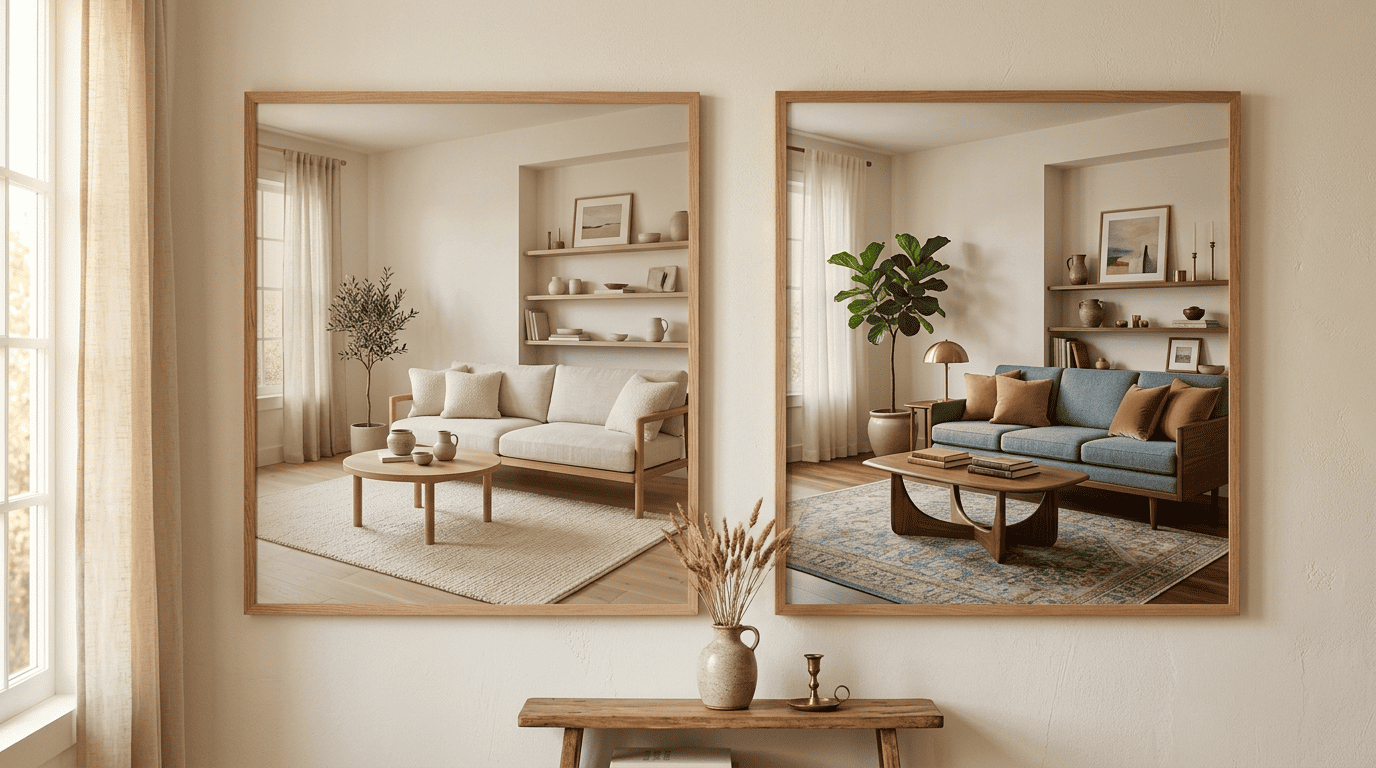
Scandinavian design leans on light wood, clean lines and a strict focus on function — it shares its DNA closely with mid-century modern design, and the two movements intersected heavily through the 1950s, adapted for long, dark Nordic winters that reward rooms filled with reflected light. Minimalist design strips that further: fewer objects, fewer colors, more negative space, built on the old design principle that less genuinely does more. Sitting between the two is Japandi, a blend of Japanese minimalism and Scandinavian simplicity built on wabi-sabi principles — an appreciation for imperfect, natural, well-worn materials. Japandi has surged in AI style libraries since roughly 2020, and it’s one of the clearest examples of how a hybrid aesthetic can become a category of its own.
Mid-Century Modern, Industrial & Contemporary (form-meets-function)
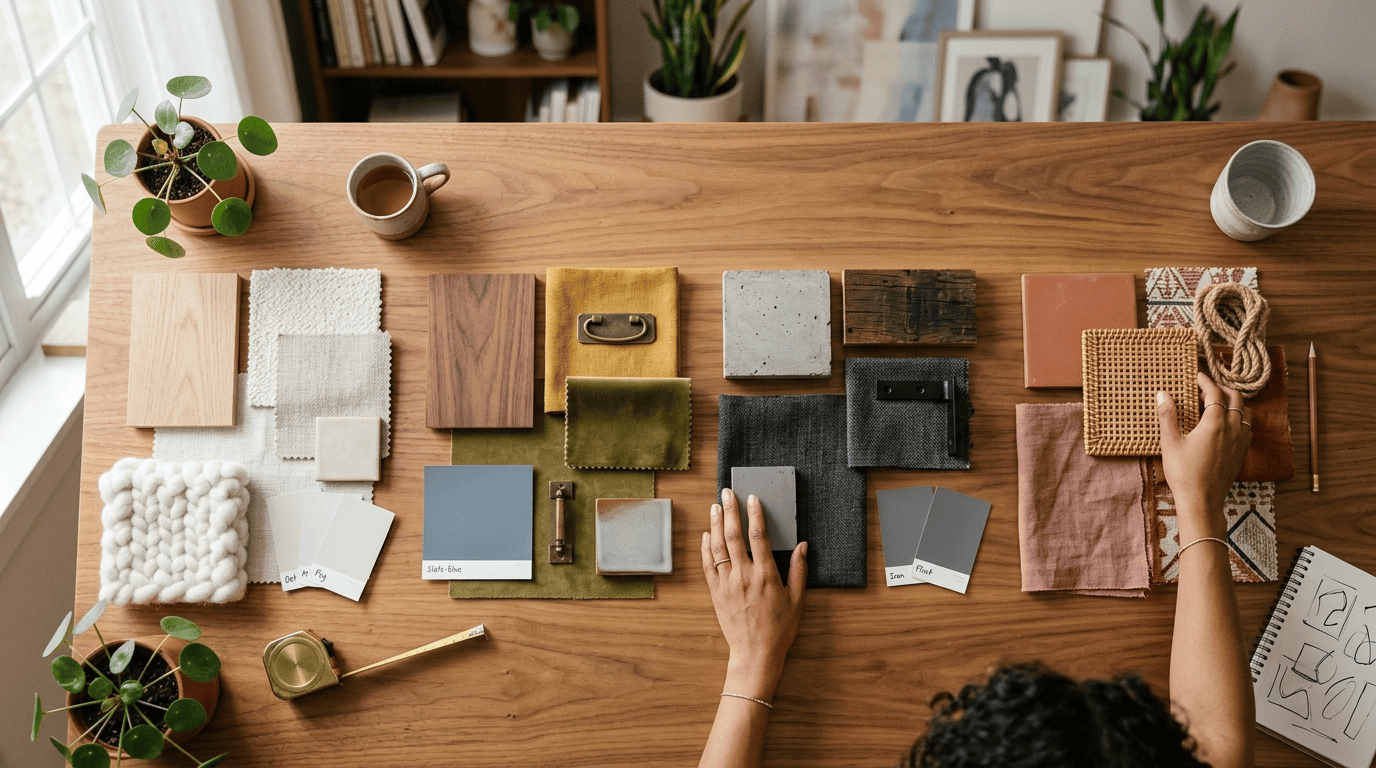
Mid-century modern design is built on clean lines, organic curved forms and a handful of iconic silhouettes — the Eames lounge chair is the shorthand example most people recognize — carrying the optimism of the post-war decades into a room. Industrial style pulls from converted warehouses and lofts: exposed brick, raw metal, poured concrete and reclaimed wood, usually paired with high ceilings and oversized windows that let the materials read as intentional rather than unfinished. Contemporary style is looser and harder to pin down by design — it means «of the moment,» which in practice tends to mean neutral tones, clean silhouettes and a lack of strong period references.
Wabi-sabi finds beauty in things imperfect, impermanent, and incomplete.
Wikipedia — Wabi-sabi
That principle is worth keeping in mind — it’s the philosophical backbone of Japandi and shows up, in smaller doses, across the whole calm-and-pared-back family of styles above.
Bohemian, Coastal, Farmhouse, Art Deco & the expressive styles
Bohemian style is the opposite instinct: layered textures, plants, patterned textiles and an eclectic mix of objects collected rather than matched. Coastal style keeps a light, sun-bleached palette and leans on natural materials — linen, rope, driftwood — to suggest a home near water without being literal about it. Farmhouse style trades on warmth and a sense of history, mixing worn wood and vintage-inspired pieces into a room that reads as lived-in rather than staged. Art Deco brings geometry, brass and a distinctly glamorous edge, borrowing the bold symmetry of 1920s architecture and design.
Beyond these, most style libraries branch out further into related expressive looks:
- Biophilic design — built around greenery, natural light and a strong connection to the outdoors
- Cottagecore — soft florals, vintage textiles and a romanticized countryside feel
- Maximalist — bold pattern-on-pattern, saturated color and deliberate visual density
- Mediterranean — sun-washed plaster, terracotta and wrought iron detailing
Each of these leans on the same underlying style-transfer logic as the core looks above — the AI simply has a broader vocabulary to draw from.
Which AI Tools Offer the Most Styles
Style count is one of the first numbers people compare when picking a tool, and the range is wide. Coverage runs from around 55 presets on the smaller end up to more than 160 on tools built specifically around style breadth, alongside dozens of supported room types.
| Style Library Size | Room Types Covered | Typical Render Time |
|---|---|---|
| 160+ | 50+ | Under 30 seconds |
| 56+ | 38+ | Under 30 seconds |
| 55+ | Standard room set | ~25 seconds |
A bigger library isn’t automatically the deciding factor. How convincingly a tool preserves your actual layout while swapping the style matters more than the raw count of names on the list — a smaller library with tight, believable renders usually beats a sprawling one with sloppy layout preservation.

Free tiers get you started; paid plans remove the ceiling. Most platforms let you test the waters before paying, and the gap between the two tiers tends to follow the same pattern across the market:
- Generation limit — 5 to 10 free renders versus unlimited on paid plans
- Watermark — usually present on free output, removed once you subscribe
- Room-type access — partial library on free, full catalog on paid
- Render priority — standard queue on free, priority queue on paid
Monthly plans in the $15-a-month range are common for unrestricted generations, and higher annual tiers exist for people running large batches of designs, sometimes bundling in a thousand or more renders a year.
How to Choose the Right Style for Your Room
The fastest way to narrow a shortlist is to think about light, size and function before you think about aesthetics you like in photos. A style that looks stunning in a sun-drenched loft can feel heavy and wrong in a small, north-facing bedroom.
- Note how much natural light the room gets and at what time of day.
- Measure or estimate square footage — small rooms and large rooms favor different palettes.
- Identify the room’s primary function (sleeping, working, entertaining).
- Shortlist 2–3 styles that match the light and size profile.
- Upload one photo and render each shortlisted style.
- Compare the before/after renders side by side.
- Pick the style that reads best against your actual furniture placement, not just the mood board.
Match the Style to Light, Size & Function
Small, dim rooms generally read better in light palettes — Scandinavian, minimalist or coastal styles bounce what little natural light there is rather than absorbing it. Larger, brighter rooms have more room to carry darker, heavier looks like industrial or mid-century modern without feeling cramped. A quick starting map:
- Small and dim → Scandinavian, minimalist, coastal
- Large and bright → industrial, mid-century modern, maximalist
- High-traffic and family-facing → farmhouse, contemporary
- Quiet and personal (bedroom, reading nook) → Japandi, biophilic
For style choices tied to a specific room type, the deeper breakdown of AI interior design for living rooms goes further into which looks suit a space built around gathering and entertaining.
Try Several Styles on One Photo
Because the AI preserves your layout rather than generating a room from scratch, there’s little cost to testing several directions before settling on one. Running the same photo through three or four different styles and comparing the results side by side is the quickest way to see what actually fits your space instead of relying on how a style looks in someone else’s home.
Can AI Blend Two Interior Design Styles?
Yes — and Japandi is the proof that hybrid styles aren’t a gimmick. It emerged from combining Japanese minimalism with Scandinavian simplicity, and it’s now common enough to be treated as its own preset rather than a novelty blend.

AI makes experimenting with combinations far easier than it would be with a mood board and a paint chart. Text-prompt tools let you type something like «Scandinavian mixed with industrial» and get a rendered interpretation rather than having to source and coordinate every material by hand. It’s the same principle behind Japandi’s rise, applied on demand to whatever two aesthetics you want to test against each other — the AI interior design for bedrooms guide has more on blending a calm hybrid look for a space meant for rest.